
“Artistically our aim is to drive artists and the experience of art outwards into the wild landscape of this island.”
— Lay of the Land
There aren’t many arts organisations in Ireland that feel as shaped by their surroundings as Lay of the Land (LOTL). If you speak to artists who’ve worked with them, you’ll hear a similar story: something shifts when you’re asked to make art while living on a cliff edge, in a forest, or beside an Atlantic swell that doesn’t really care what your plans were. And that’s exactly the kind of shift LOTL has been nurturing since 2016.
Below is a close look at how the organisation works, the projects that define it, and why its approach to site-responsive art and land art residencies keeps drawing artists and visitors back to the edges of Ireland.
A quick look at what Lay of the Land does
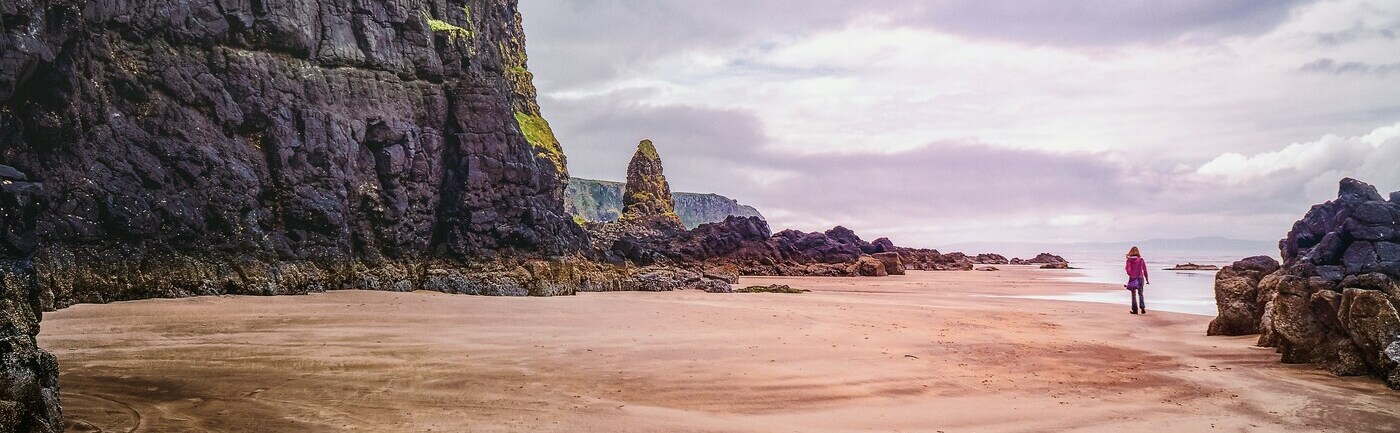
Lay of the Land is a visual arts organisation founded by Kari Cahill and Hazel Mc Cague in 2016, with the goal of creating site-responsive art projects in remote Irish landscapes.
“Site-responsive,” in the simplest possible language, means the art comes directly from the place where it’s made. Artists live on the land, learn its stories, work with what’s around them and create pieces that couldn’t have existed anywhere else.
LOTL’s core model is built around immersive residencies that run for 2–3 weeks.
During this time, artists:
- Live together in rural homes or cabins
- Walk, forage, sketch, research and build
- Make sculptural installations using materials found or sourced responsibly
- Prepare for outdoor exhibitions that stay open for several days to the public
What is land art?
Land art started in the 1960s when artists decided to stop working in galleries and started making art directly in nature instead.
What makes land art special:
- It belongs to the place – you can’t move the artwork somewhere else
- Made from nature – rocks, soil, wood, water, plants from the site
- Changes over time – rain, wind, and seasons shape the work
- Often temporary – designed to eventually disappear back into nature
- Big enough to experience – you can walk around it or even through it
LOTL’s residencies follow these ideas perfectly. Artists don’t show up with finished plans. They live on the land first, watch how it changes, listen to its rhythms, then build something that feels like it grew there naturally. The works are temporary, raw, and completely tied to the Irish cliffs, forests, and coastlines where they’re made – that’s land art at its best.
Over the years, this approach has earned LOTL national recognition, including:
- Arts Council of Ireland Awards (Festival & Events Award 2017, Festival Investment Scheme 2018, Project Award 2019)
- Features in major outlets such as The Irish Times, Bloomers Magazine, Body & Soul, “Above the Fold”, and even Lonely Planet mentions
- A growing reputation among emerging artists who specialise in land-based or environment-focused practice
By 2025, LOTL is widely known as one of Ireland’s most consistent producers of outdoor, site-responsive art – a niche that’s becoming increasingly relevant as environmentally focused work becomes more present across global art conversations.
Solitude as a working condition for artists
For artists working with Lay of the Land, solitude is not incidental – it is a working condition. Remote sites remove many of the pressures that usually shape creative work, including constant visibility and the need to explain ideas before they are fully formed.
Time slows in these environments. Artists spend extended periods observing weather, terrain, and material, allowing focus to develop without interruption. Solitude here is treated not as retreat, but as a practical way of creating the mental space required for site-responsive work.
Through its residencies, LOTL formalises this approach by placing artists in remote settings where attention can remain narrow, deliberate, and guided by the land itself.
Why solitude has become a wider cultural habit
This preference for solitude is no longer limited to artistic practice. More people now seek forms of downtime that reduce input rather than maximise stimulation. Instead of disconnecting entirely, they choose activities that are individual, predictable, and easy to step away from.
Reading, listening, and using quiet digital platforms reflect this broader shift. Solitude, in this sense, has become a way of managing attention – a method for creating small, controlled spaces within an otherwise busy environment.
Online casinos as a quiet, individual digital activity
Within this context, some regulated online activities are used in similarly contained ways. Regulated online casino platforms, when approached without social or promotional framing, can function as solitary, time-limited digital use rather than as public entertainment.
Here, the emphasis is on structure and control: activities accessed alone, requiring no audience, and easily paused or left. This places them alongside other forms of individual digital downtime, shaped less by excitement than by the preference for focus and autonomy.
How Lay of the Land grew from a simple idea to a national arts organisation
When the founders talk about the early days, they often describe a kind of restlessness in the Irish art scene at the time. Exhibitions felt a bit too tidy, a bit too separated from the landscapes that shaped everyone’s everyday life.
“We were seeing so many artists whose work clearly came from a connection to the land,” one collaborator told us, “But the work never actually went to the land.”
So, Kari and Hazel started experimenting at Brow Head, near Ireland’s most southerly point. The first TOMBOLO project in 2016 was made with a small group of artists, borrowed tools, and more enthusiasm than financial certainty. Artists lived on-site, cooked together, and built works with whatever materials made sense: moss, steel, glass, driftwood, rope, bracken, and found farming debris.
That first project showed them that the idea worked – and that the appetite for it was bigger than expected. LOTL began to grow.
By 2017, their team included:
- Production crew
- Volunteers
- Workshop facilitators
- Photographers
- A technical team who could safely rig installations on cliffs and forest floors
And that growth shifted LOTL from a loose creative experiment into a recognised national organisation. Their art residency model in Ireland became more structured, artists received stipends, and the public exhibition days included tours, workshops and community events.
Today, LOTL feels like a bridge between contemporary art, local communities, and Ireland’s wildest landscapes.
And honestly? It’s a bridge that didn’t exist before.
Meet the founders: Kari Cahill and Hazel Mc Cague
Every organisation reflects its founders, and Lay of the Land is no exception.
Kari Cahill
Kari’s background blends fine art, landscape installation and design, with a strong sense of how materials behave outdoors. She has previously co-founded artist-run spaces, worked as a curator, produced large installations for festivals and drawn artistic influences from coastal and rural life. Much of her work focuses on natural fibre, sculptural form, and the physicality of place.
Hazel Mc Cague
Hazel started as a textile designer, specialising in woven structures for aviation and soft furnishings. But she gradually moved away from industry and into outdoor sculpture, installation, and material experimentation. Her work often uses recycled or repurposed materials, and she’s well-known for her hands-on approach to building in harsh weather conditions.
Together, the pair describe their philosophy simply:
“We wanted artists to actually feel the landscape, not just reference it.”
Their partnership is grounded in collaboration, sustainability, and a clear belief that art can be made anywhere, especially in places that aren’t usually considered “art spaces.”
How LOTL’s Art Residencies in Ireland Actually Work

LOTL’s art residencies aren’t your usual art retreats. They’re more like temporary creative ecosystems built on cliffs, woodland floors, beaches and rocky headlands.
Artists live together (sometimes six or eight at a time) and share everything: cooking, cleaning, planning, carrying tools up steep terrain, and adjusting plans on the fly when the Atlantic throws a tantrum.
As one artist joked during TOMBOLO 19: “You learn quickly that the weather is basically a collaborator.”
Daily life looks something like this:
- Morning weather checks
- Long walks across the site
- Sketching, gathering materials or testing installations
- Group meals
- On-site building with limited equipment
- Evenings spent around fire pits or at the edge of the headland reviewing progress
At the end of the residency, the public is invited to an outdoor exhibition with tours, talks, weaving workshops, printmaking, and occasionally night walks or stargazing sessions.
Here’s the basic structure LOTL follows:
Stage | Duration | What Happens |
|---|---|---|
Residency | 2–3 weeks | Artists live/work on site |
Build Week | ~1 week | Crew arrives, installation construction |
Exhibition | 3–10 days | Public visits, tours, workshops, performances |
Land Art Projects That Shaped LOTL’s Identity
Here’s where LOTL’s identity really started taking shape – out on the cliffs, forests and isolated headlands where each project pushed the team a little further. These land art projects established LOTL’s reputation as a leading force in Irish site-responsive practice.
TOMBOLO 2016
Six artists lived and worked on Ireland’s most southerly headland. Early works like Sisters, Refractions, and BrackenBall set the tone for future projects: collaborative making, wild conditions, and art that literally grew out of the land.
TOMBOLO 2017
More artists, more volunteers, and a clearer art residency format. Performances, workshops and a structured public weekend turned TOMBOLO from an experiment into a proper art event.
SILVA 2018
LOTL shifted locations to Knockomagh Wood at Lough Hyne. Four artists created forest-responsive land art installations shaped by moss, trees, humidity, and light. The residency was documented in a film by Fellipe Lopes, giving the project international reach.
RES 1–3 (2019)
These smaller residencies in Kerry and Donegal allowed artists to explore ideas without the pressure of producing a public exhibition. This freedom led to some of the organisation’s most experimental works.
TOMBOLO 19
Arguably LOTL’s most ambitious project:
- Guided tours led by the artists and former lighthouse keeper Ger Butler
- Frame loom weaving workshops
- Printmaking in outdoor shelters
- Beach clean and sand mural with Cre8 Sustainability and Clean Coasts
- Night walks, moon-gazing sessions, fire pits
- A large crew of production and technical staff
TOMBOLO 19 blended community engagement, environmental awareness, and artmaking into what felt like a small, temporary village.
CALAFORT
An intimate island art residency on Arranmore Island, Donegal. Artists spent three weeks gathering stories, foraging, and creating works that reflected island life and shared memory. CALAFORT placed a strong focus on oral history and local collaboration.
Artists who shaped each project
LOTL’s land art residencies attract artists from a wide range of backgrounds, but they share an interest in landscape and experimentation.
Emily Robyn Archer
Known for environmental education, sustainability-focused installations, and hydroponic structures. Her TOMBOLO print series is still one of the most recognised outputs from the early years.
Liliane Puthod
Works with commodities and unexpected materials. Her projects during TOMBOLO explored scale, balance, and the absurdity of functional objects placed in wild environments.
Millie Egan
A multidisciplinary artist working with found materials, folklore influences and handcrafted sculpture. Her practice complements LOTL’s emphasis on reusing what the land or local farms provide.
Melanie King
An artist focused on astronomy, analogue photography and dark skies. During TOMBOLO she created night-based observational work that reflected her ongoing interest in light from distant worlds.
Other past participants include Anna Wylie, Margie Jean Lewis, Katrin Hanusch, Antonia Beard, Brenda Kearney, and several more – each bringing a different layer to LOTL’s evolving identity.
Workshops and public activities that connect people to the land
Since 2017, LOTL has expanded their public programming, blending creativity with environmental awareness. Visitors can expect:
- Frame loom weaving workshops led by Hazel and Kari
- Printmaking sessions with visiting artists
- Collaborative sand murals created during beach cleans
- Clean Coasts activities with community groups
- Night walks and moon-gazing
- Guided tours explaining the artworks, landscape and history
- Talks by former lighthouse keepers, ecologists, or local historians
These activities are designed to make visitors feel comfortable exploring remote terrain while engaging with contemporary art.
How LOTL is funded and supported
Lay of the Land is very open about how its projects are financed, which matters even more in 2026 as artists push for fair pay and clearer budgets. Their work is funded through a mix of Arts Council of Ireland grants, Cork County Council support, Fundit crowdfunding, and community donations collected online or during TOMBOLO and SILVA exhibition weekends. LOTL often says that none of their projects would happen without people who give time, tools, transport and on-the-ground help.
They also publish full income and expenditure charts for every project, showing exactly where money goes – from artist fees and accommodation to materials, crew wages, insurance and travel. In 2019 they received €70,000 from the Arts Council and raised €33,000 through fundraising, which was split across TOMBOLO 19, CALAFORT and the RES residencies. That combination of grants and community support keeps LOTL accountable and able to work in such remote, weather-heavy locations.
“When Hazel and I started Lay of the Land in 2016, we just wanted artists to genuinely feel the landscape – not stand back from it. Three projects later, after 43 artworks, rainstorms, cliff walks, forest nights and countless shared meals, I’m still amazed by how powerful it is when people make art directly with a place. Every residency reminds us why we do this – the land leads, and we follow.”
— Kari Cahill, Co-Founder of Lay of the Land (source: artist website)
FAQs
Most LOTL exhibitions are open access, but workshops may require early sign-up.
Not necessarily. LOTL selects artists based on curiosity, openness and ideas rather than their comfort with harsh weather.
No. Installations are temporary and removed responsibly after the exhibition.
Yes, though availability varies by project and funding year.
LOTL typically announces open calls for their art residencies in Ireland through their website and social media channels. Applications generally require a portfolio, artist statement, and responses to questions about your relationship to landscape, community, and creative process. Residencies are competitive and focus on artists whose work genuinely engages with themes of environment, heritage, and collaboration.
If you’re visiting Ireland in 2026 and want to experience art that truly connects with the landscape, LOTL’s projects are worth checking out. They can be tough, a bit muddy, sometimes windy, but always unforgettable.